Ask ten dog owners how they care for their dog's coat and you'll get ten different answers — and most of them will be specific to their breed. That's because dog coats vary enormously in structure, growth patterns, and maintenance requirements. What's right for a Labrador is wrong for a Poodle. What works for a Husky could actively damage a Maltese's coat.
Understanding the basic coat types helps you make better decisions about at-home maintenance, professional grooming frequency, and what to do — or avoid — in each case.
Short, Smooth Coats
Examples: Beagles, Boxers, Dalmatians, Greyhounds, Whippets, Dachshunds (smooth variety), Pugs, Boston Terriers
Short, smooth coats lie flat against the body and have a sleek texture. They don't mat, don't grow long, and generally don't require complex grooming. This is the lowest-maintenance coat type for professional grooming purposes — most short-coated dogs need professional attention every 8–12 weeks, mainly for nail trims, ear cleaning, and a thorough bath.
What people often underestimate about short-coated dogs is how much they can shed. Pugs and Labradors are classic examples: their coats are short, but the sheer volume of shed hair can be surprising. A rubber grooming mitt or a deshedding tool used regularly at home can make a real difference.
At-home brushing once a week is usually sufficient for short-coated breeds. Use a rubber curry brush or a bristle brush — nothing too aggressive. The goal is removing loose hair and distributing natural oils rather than detangling.
Double Coats
Examples: German Shepherds, Golden Retrievers, Labrador Retrievers, Siberian Huskies, Alaskan Malamutes, Corgis, Bernese Mountain Dogs, Border Collies, Chow Chows
Double-coated breeds have two distinct layers: a dense, soft undercoat that regulates body temperature and a longer, coarser outer "guard coat" that repels moisture and debris. This combination is effective at keeping dogs comfortable across a wide range of temperatures — but it also requires careful maintenance.
The most important thing to understand about double coats is that the undercoat sheds seasonally, typically twice a year. During shedding season, the undercoat releases in large quantities. Without regular brushing, the shed undercoat can pack against the skin and impede airflow, which can cause matting and skin irritation.
Shaving a double-coated dog is generally not recommended. The guard coat and undercoat grow at different rates, and after shaving, the texture and protective properties of the coat may not return to normal. It can also increase the risk of sunburn. Managing shedding through regular deshedding treatments and brushing is typically a better approach.
Double-coated dogs benefit from professional grooming every 6–8 weeks, particularly during shedding season. At home, a slicker brush for surface work combined with an undercoat rake or deshedding tool gets the best results.
Long, Flowing Coats
Examples: Shih Tzu, Yorkshire Terrier, Maltese, Afghan Hound, Lhasa Apso, Havanese, Silky Terrier
Long-coated breeds have fine, flowing hair that grows continuously and can reach significant lengths without regular trims. The coat can be kept long (often called a "show trim") or cut shorter for easier management (a "puppy trim" or "teddy bear cut"). Most pet owners opt for shorter cuts for practical reasons.
The challenge with long coats is matting. The fine texture of these coats means tangles form quickly, especially in friction areas: behind the ears, under the armpits, around the collar, and at the base of the tail. Left unattended, tangles become mats — compressed, often painful knots of hair that sit close to the skin.
To prevent matting, these dogs need daily brushing at home. A pin brush or slicker brush works well, but the most important step is following up with a metal comb to check that you've reached through to the skin. If the comb catches on anything, there's a tangle that needs addressing.
Long-coated dogs typically need professional grooming every 4–6 weeks. If matting is severe, the coat may need to be clipped short before it can be rebuilt — which is worth avoiding with regular maintenance.
Curly and Wavy Coats
Examples: Poodles (all sizes), Bichon Frise, Portuguese Water Dog, Lagotto Romagnolo, and most Doodle mixes (Goldendoodles, Labradoodles, Bernedoodles)
Curly and wavy coats are among the most popular right now, largely because of the Doodle boom. They're often marketed as low-shedding or hypoallergenic — and while there's some truth to the reduced shedding claim, the maintenance requirements are significant.
Curly coats don't shed the way straight coats do. Instead, loose hair stays caught in the curl and accumulates over time. Without regular brushing, this accumulation leads to dense matting that can be extremely difficult to remove. It's one of the most common issues we see — Doodle owners who weren't prepared for the brushing commitment and come in with dogs who need a full shave-down.
At home, curly-coated dogs need brushing 3–5 times per week. Use a slicker brush in sections, working from the skin outward. Check with a metal comb after brushing to confirm you've worked through the entire coat depth, not just the surface.
Professionally, curly-coated dogs typically need grooming every 4–6 weeks. This is non-negotiable for keeping the coat in good condition. If budget is a concern, more frequent brushing at home can stretch appointments somewhat — but not indefinitely.
Wire Coats
Examples: Wire Fox Terrier, Airedale Terrier, Miniature Schnauzer, Jack Russell Terrier (rough), Border Terrier, Welsh Terrier, Scottish Terrier
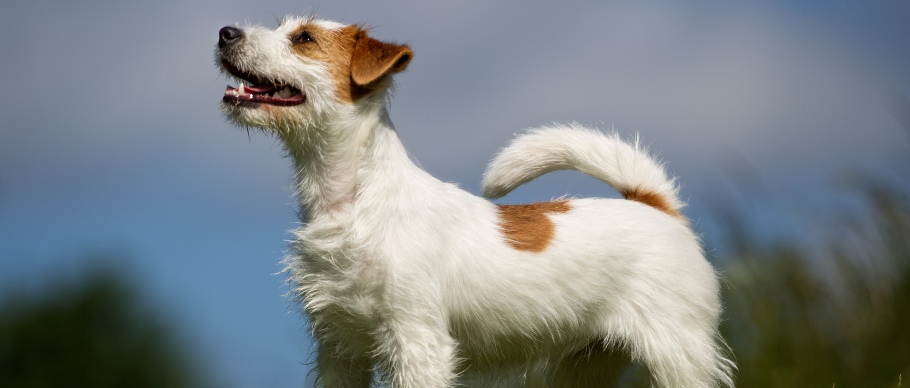
Wire-coated dogs have a coarse, dense outer coat with a softer undercoat. The characteristic rough texture is achieved through a process called hand-stripping — pulling the dead outer coat by hand rather than clipping it. Hand-stripping preserves coat texture and color and is preferred for show dogs and breed enthusiasts.
For most pet owners, clipping is a practical alternative that keeps the coat tidy without the time investment of hand-stripping. The trade-off is that clipping softens the coat texture over time and can affect color in some breeds. This is a cosmetic consideration rather than a health one.
Wire-coated dogs typically need professional grooming every 6–8 weeks. At home, a slicker brush or medium-bristle brush 2–3 times per week handles most maintenance. The beard and eyebrows common to many terriers and Schnauzers need specific attention — food and moisture can accumulate there and cause skin irritation if not cleaned regularly.
Coats With Special Considerations
Corded Coats
Breeds like the Komondor and Puli naturally form cords — twisted, rope-like strands of coat. Maintaining corded coats requires separating cords manually as they form to prevent them from merging. Corded coats take longer to dry after bathing and need careful management to prevent mildew. This is a specialized coat type that benefits from a groomer familiar with it.
Hairless Breeds
The Xoloitzcuintli (Xolo) and Chinese Crested (hairless variety) require skin care rather than coat care — regular bathing, sun protection, and moisturizing depending on climate and individual skin needs. These breeds don't need traditional grooming but do need attention to skin health.
What This Means for Your Grooming Routine
Knowing your dog's coat type helps you have a more productive conversation with your groomer. When you understand that your Doodle's coat mats quickly and needs daily maintenance, a groomer's recommendation to come in every 4–6 weeks doesn't feel like upselling — it's practical advice. When you know your Beagle has a low-maintenance coat, you won't over-invest in grooming tools and products you don't need.
If you're unsure which coat type your dog has — particularly common with mixed breeds — ask us. We can tell you exactly what you're working with and what that means for care at home and professional grooming frequency.
You can also try our Grooming Schedule Quiz on the homepage for personalized suggestions based on your dog's coat and lifestyle.