If you've ever Googled "how often should I groom my dog" and come back with answers ranging from "every 4 weeks" to "twice a year," you're not alone. The reason there's such a wide range is that grooming frequency genuinely depends on the individual animal.
After 15 years of working with dogs of every coat type and lifestyle imaginable, the most honest answer I can give you is: it depends on five things. Let's go through them.
1. Coat Type Is the Biggest Factor
Different coats have different maintenance needs, and that directly affects how often a dog should come in for professional grooming.
Short, Smooth Coats
Breeds like Beagles, Boxers, Dalmatians, and Greyhounds have low-maintenance coats. They don't mat, they don't grow continuously, and they don't trap debris the way longer-haired breeds do. For these dogs, professional grooming every 8–12 weeks is usually enough — mainly for nail trims, ear cleaning, and a good bath.
That said, short-coated breeds can still be heavy shedders (Labrador Retrievers and Pugs come to mind). A deshedding treatment every 6–8 weeks can make a noticeable difference in how much hair ends up on your furniture.
Long, Flowing Coats
Breeds like Shih Tzus, Yorkshire Terriers, Afghan Hounds, and Maltese have continuously growing hair that mats if it isn't maintained. These dogs typically need professional grooming every 4–6 weeks. Between visits, daily brushing is important — not just for appearances, but to prevent painful matting close to the skin.
Double Coats
German Shepherds, Golden Retrievers, Siberian Huskies, Corgis — these breeds have a dense undercoat beneath a longer topcoat. They go through heavy shedding periods (usually twice a year) but benefit from professional grooming every 6–8 weeks to manage the undercoat and keep it from packing down. Shaving double-coated breeds is generally not recommended, as the topcoat acts as insulation and sun protection.
Curly and Wavy Coats
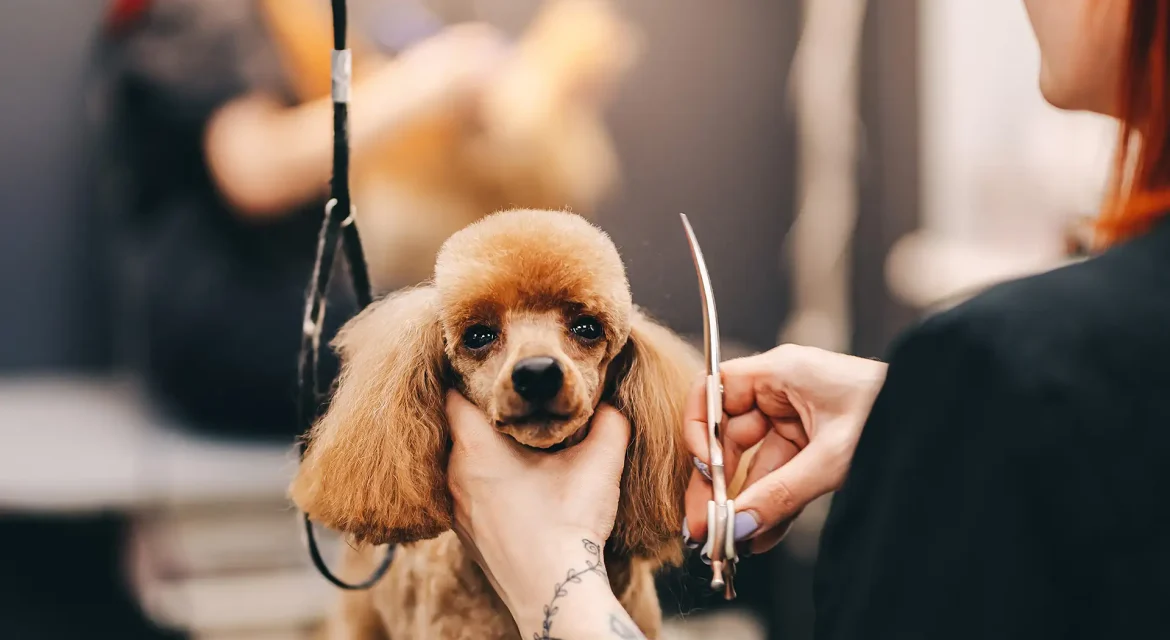
Poodles, Bichon Frises, Portuguese Water Dogs, and the ever-popular Doodle mixes fall into this category. Curly coats mat quickly and grow continuously, often requiring grooming every 4–6 weeks. If you prefer a shorter trim, you may be able to stretch to 6–8 weeks. If you like a longer style, 4 weeks is more realistic.
Wire Coats
Terriers and Schnauzers typically have wiry, rough-textured coats. Some owners choose hand-stripping (which pulls the dead coat rather than cutting it) to maintain texture; others clip the coat. Professionally groomed every 6–8 weeks, with regular home brushing between visits.
- Short/smooth: Every 8–12 weeks
- Long/flowing: Every 4–6 weeks
- Double coats: Every 6–8 weeks
- Curly/wavy: Every 4–6 weeks
- Wire coats: Every 6–8 weeks
2. How Active Is Your Dog?

A dog who hikes through the brush twice a week picks up more debris, tangles, and moisture than a dog who strolls around a clean suburban neighborhood. Activity level matters, particularly for longer-coated breeds.
If your dog regularly swims, runs off-leash in grassy fields, or loves a good roll in whatever the yard is offering, you'll want to adjust your brushing routine at home and consider slightly more frequent professional grooming — even just to keep things manageable.
3. Time of Year Changes Things
Seasonal shedding is real, especially in California where temperature swings are more gradual than in colder climates. Most double-coated dogs blow their undercoat twice a year — typically in spring and fall. During these periods, more frequent brushing and a deshedding treatment can help significantly.
Summer heat is also worth considering. Some dogs do well with a slightly shorter trim during warmer months, which can reduce grooming intervals. Others are better left at their natural coat length. If you're not sure what's appropriate for your breed, it's worth asking during your next appointment.
4. Your Dog's Age
Puppies benefit from starting grooming visits early — not because they need extensive work, but because getting them comfortable with the experience makes everything easier as they grow. A short "puppy introduction" groom at 12–16 weeks (after their vaccines are current) focuses on socialization and gentle handling rather than a full trim.
Senior dogs may need more frequent attention, but often less intensive work. Older dogs can be less comfortable standing for long periods, so shorter, more focused sessions work better than one long appointment.
5. Signs Your Dog Is Overdue for a Groom
Even with a schedule, it helps to know what to look for between appointments:
- Matting or tangling — especially behind the ears, under the armpits, or around the collar
- Nails clicking on hard floors — a clear sign they've grown too long
- Visible dirt or odor — obvious, but worth mentioning if your dog spends time outdoors
- Hair obscuring the eyes — both uncomfortable and a potential safety issue
- Excessive scratching — sometimes related to matting, sometimes a skin issue worth checking
Home Brushing: What to Do Between Visits
Professional grooming doesn't replace home maintenance — the two work together. For most long-coated and curly-coated breeds, brushing 3–5 times per week prevents the kind of matting that can require a shave-down at the salon.
A slicker brush works well for general detangling on most coat types. A metal comb is useful for checking that you've worked through the coat all the way down to the skin, not just the surface. Deshedding tools (like Furminator-style brushes) work well for double-coated breeds during shedding seasons.
One thing worth knowing: matted coats are uncomfortable for dogs, and removing them requires more work, more time, and a higher grooming cost. Keeping up with brushing at home is genuinely the most practical thing most owners can do for their pet's coat health — and their own grooming bills.
Building a Realistic Schedule
The simplest approach: pick a grooming interval based on your dog's coat type (use the guide above), then set a recurring reminder. If you find the coat is consistently matted or dirty before that date, shorten the interval. If things look fine and you're keeping up with brushing, you might be able to stretch slightly.
When in doubt, ask us. At your next appointment we're happy to talk through what makes sense for your specific dog — including what to brush, how often, and what to watch for between visits.